Search for missing Titanic sub reaches tragic end with all 5 on board dead
Geoff Bennett:
Some additional perspective on this accident now and what it could mean going forward.
We're joined again by Jules Jaffe, an oceanographer with the Scripps Institution of Oceanography at the University of California, San Diego.
Thank you for being with us.
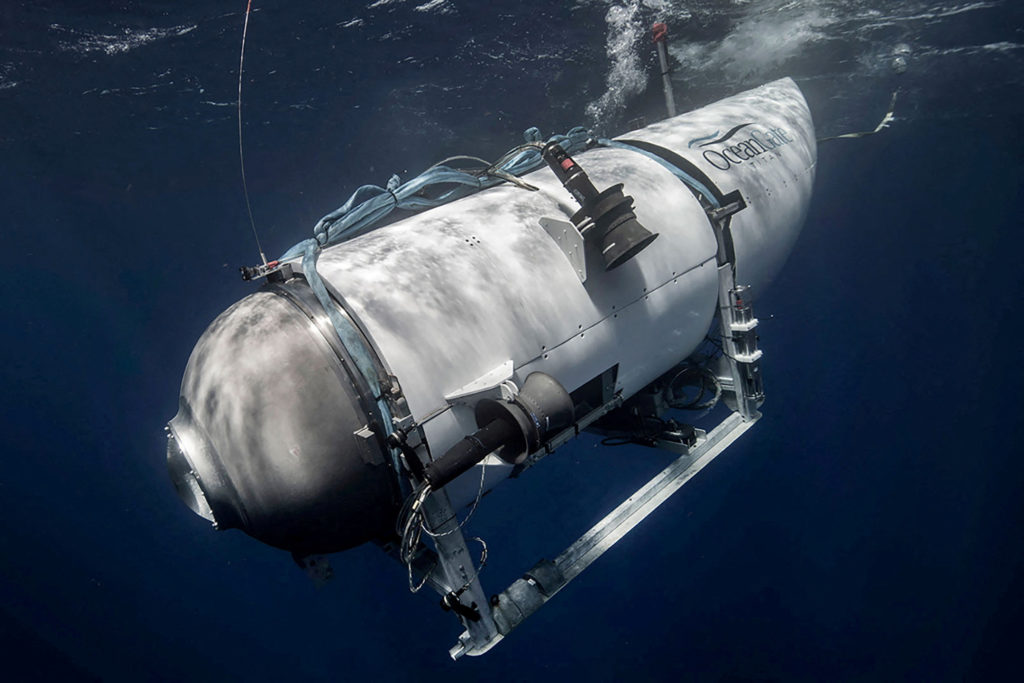
And, Jules, when the Coast Guard says that the submersible's debris is consistent with the catastrophic loss of the pressure chamber, what does that mean? What, based on your vast experience, likely happened?
Jules Jaffe, Research Oceanographer, Marine Physical Laboratory, Scripps Institution of Oceanography: Well, as we know, the vehicle lost contact about one-and-three-quarters hour after it left the surface.
And it was about 2.5 hours to the bottom. So my conjecture is actually that it was not quite at the bottom, but was probably around 800 or 900 — 8,000 or 9,000 feet deep. And from what we understand, the pressure at that depth is around 4,000 pounds per square inch.
So, think about a square inch. Think about 4,000 pounds. When you think about the pressure, it's actually coming from all directions. So the best analogy I could think about was, imagine you have an egg in your hand and you simply crush it. And I think, honestly, that is what happened to the vehicle.
ncG1vNJzZmivp6x7sa7SZ6arn1%2Bjsri%2Fx6isq2ejnby4e9KemKubmGKzsL6MpqCsq5mjtG7AyK2Yp6GTYsC2royrnJqbmJrAbsDRmp6im12au6V51qKroWWRoblugYyopWaan5a%2FpXnDnpid